
At the Chicago Psychoanalytic Institute, our faculty and students are more than scholars—they are clinical innovators, published authors, and community leaders dedicated to the evolution of psychoanalytic thought.
Migratory Grief in the Current Climate
José Antonio Hernández Zeind, MS, LCPC
How do systemic immigration policies impact the human psyche?
In this presentation from the Barr-Harris 50th Anniversary Clinical Conference, José Antonio Hernández Zeind, Clinical Fellow at the Chicago Psychoanalytic Institute explores migratory grief as a clinically distinct and politically shaped phenomenon. Under current conditions of immigration enforcement, migratory grief does not merely complicate mourning—it structurally freezes it.
Drawing from direct clinical work with recently arrived Latin American families in Chicago, José proposes the concept of “frozen mourning.”
Recording Date: May 29, 2026 (Day 2 of the Barr-Harris 50th Anniversary Clinical Conference)
JAPA Author Interview: Michael E. Shulman on What Use Is Freud?
Arjune Rama, MD, interviews Michael E. Shulman, PhD, about his paper “What Use Is Freud?”
JAPA Author Interview: Steven Cooper on “The Play of Mourning”
Gregory Rizzolo, PhD, Editor in Chief of The Journal of the American Psychoanalytic Association (JAPA) interviews Steven H. Cooper, PhD, about his paper “The Play of Mourning.”
6th Lifetime Achievement Awards Ceremony
for Extraordinary Accomplishments in Psychohistory
Presented by Psychohistory Forum
March 7th, 2026, 11am-1:30pm EST
(virtual room opens at 10:45am EST)
RSVP is required: https://psychohistoryforum.com/march-7-2026-lifetime-achievement-award-ceremony-for-james-anderson-paul-elovitz-joseph-ponterotto-charles-strozier/
SHORT BIOS OF THE AWARDEES:
James William Anderson, PhD, is Professor of Clinical Psychiatry and Behavioral Sciences, Northwestern University, a member of the faculty of the Chicago Psychoanalytic Institute, and a clinical psychologist in private practice. He serves as Editor of the Annual of Psychoanalysis and member of the Editorial Board of Clio’s Psyche. He wrote Psychobiography: In Search of the Inner Life (Oxford University Press, 2024). In addition, he has published psychobiographical papers on William and Henry James, Abraham Lincoln, Edith Wharton, Sigmund Freud, D. W. Winnicott, Henry A. Murray, Woodrow Wilson, and Frank Lloyd Wright. He can be reached at j-anderson3@northwestern.edu.
Paul H. Elovitz, PhD, has been organizing and advancing psychohistorical scholarship since his early years as a faculty member at Ramapo College, then served as convener of the Institute for Psychohistory Saturday Workshops (1975–1982). In 1982, he founded the Psychohistory Forum to nurture psychohistorical research and continues to lead its Executive Council. In 1994, he launched Clio’s Psyche (cliospsyche.org), serving as its Editor-in-Chief since its inception.
A historian, psychoanalytic researcher, and prolific author of approximately 400 publications, Dr. Elovitz’s work spans presidential psychobiography, pedagogy, and the documentation of psychohistory as a field. After completing his doctoral degree in history, he trained and practiced as a psychoanalyst, and in 2019 was designated the first Research Psychoanalyst by the New Jersey Institute for Psychoanalysis. He is the author of The Making of Psychohistory, editor of The Many Roads of the Builders of Psychohistory, and the author or editor of eight additional books.
Dr. Elovitz is a founding member and past president of the International Psychohistorical Association (established 1978), on whose leadership council he continues to serve. A founding faculty member at Ramapo College, he has also taught at Temple, Rutgers, and Fairleigh Dickinson universities. He can be reached at cliospsycheeditor@gmail.com.
Joseph G. Ponterotto, PhD, is Professor of Counseling Psychology in Fordham University’s Graduate School of Education, Lincoln Center Campus. His primary research interests are in psychobiography, multicultural psychology, and qualitative research methods. He has published book-length psychobiographies on chess champion Bobby Fischer — exploring the genius, mystery, and psychological decline of the world chess champion — and on John F. Kennedy, Jr. (both Charles C Thomas, 2012 and 2019). He co-edited Beyond WEIRD: Psychobiography in Times of Transcultural and Transdisciplinary Perspectives (Springer, 2023) and served as Scholarly Lead for a special section on psychobiography in the American Psychologist (2017). His latest book, The Psychobiographer’s Handbook: A Practical Guide to Research and Ethics (American Psychological Association, 2025), draws on twenty years of conducting, reviewing, and teaching psychobiography. He has published close to 30 psychobiography-focused journal articles in outlets including American Psychologist, Review of General Psychology, and The Journal of Psychohistory. He can be reached at ponterotto@fordham.edu.
Charles B. (Chuck) Strozier, PhD, is a Professor Emeritus of History, John Jay College and the Graduate Center, The City University of New York; a Training and Supervising Analyst at the TRISP Institute and Foundation; and a practicing psychoanalyst. He is the author of the definitive biography, Heinz Kohut: The Making of a Psychoanalyst (2001), and more recently the lead author of The New World of Self: Heinz Kohut’s Transformation of Psychoanalysis and Psychotherapy (2022). He is also the co-author of The Fundamentalist Mindset (2010); and the author of Apocalypse: The Psychology of Fundamentalism in America (1994); Until the Fires Stopped Burning: 9/11 and the World Trade Center Disaster in the Words of Survivors and Witnesses (2011); and two books on Abraham Lincoln, Lincoln’s Quest for Union: A Psychological Portrait (1982, revised 2001) and Your Friend Forever, A. Lincoln (2016), among several other books and close to 100 articles. He is the lead author of two books in progress: the first, with Orly Shoshani, Idealization: Psychological, Spiritual, and Political Meanings; and the second, with David Terman et al., How Self Psychology Actually Works. He can be reached at Chuck@charlesbstrozier.com.
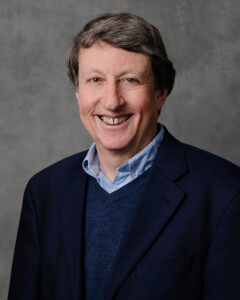
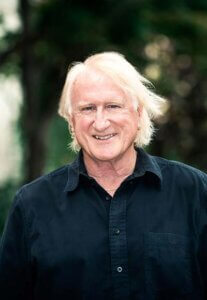
Decentralized Learning Experiences
Narrative, Listening and the Semiotics of Possibility – Gregory S. Rizzolo, PhD LCPC
Description
In this 5 session course, Gregory Rizzolo PhD will introduce participants to his work critiquing the concept of regression and arguing for an irreversible model of lifespan development. The argument, in essence, is that we develop through ever-new cycles of deferred action, so that “repetition” is never simply the return to a former state. We will build on this perspective to consider a semiotic framing of psychopathology and therapeutic action. Readings will include Rizzolo’s more recent work on narrative and the semiotics of listening, as well as the presentation of two unpublished works, where students will have the chance to participate in thinking through live problems for the instructor.
Presenter
Gregory S. Rizzolo PhD is the Editor-in-Chief of the Journal of the American Psychoanalytic Association, as well as a faculty member at the Chicago Psychoanalytic Institute. His work has appeared in Psychoanalytic Psychology, the Psychoanalytic Study of the Child and the Journal of the American Psychoanalytic Association, among others. In 2017, he received the JAPA Prize for his paper, “The Specter of the Primitive.” He is the author of The Critique of Regression (Routledge, 2018).

Faculty
Discussant:
DISCUSSION GROUP 7:
ENRICHING ADULT ANALYTIC WORK BY CHILD ANALYTIC TRAINING AND PRACTICE
PARENT WORK IN PSYCHOANALYSIS
Faculty
Chair/Discussant:
PANEL 12:
TREATING PATIENTS WHO ARE PARENTS

Faculty
Co-chair:
RESEARCH TRACK:
A THREE-SESSION SEQUENCE ON THE THEORY AND PRACTICE OF NEUROPSYCHOANALYSIS: BUILDING BRIDGES: FROM PREDICTIVE BRAINS TO SUFFERING MINDS
SESSION 1: THE BASIC THEORY OF NEUROPSYCHOANALYSIS
SESSION 2: TRANSLATING PREDICTIVE PROCESSING TO PSYCHOANALYTIC PRACTICE
SESSION 3: CLINICAL PRESENTATION

Psychoanalytic Education Candidate
Presenter:
RESEARCH TRACK:
A THREE-SESSION SEQUENCE ON THE THEORY AND PRACTICE OF NEUROPSYCHOANALYSIS: BUILDING BRIDGES: FROM PREDICTIVE BRAINS TO SUFFERING MINDS
SESSION 3: CLINICAL PRESENTATION

Psychoanalytic Education Candidate
Presenter:
DISCUSSION GROUP 24:
THE CANDIDATE AT WORK: CLINICAL CASE CONSULTATION WITH JONATHAN SHEDLER, PH.D.: TREATING CHALLENGING PATIENTS: FROM CASE FORMULATION TO SHARED TREATMENT FOCUS

Faculty
Presenter:
RESEARCH TRACK:
RESEARCH SYMPOSIUM #1
Faculty
Chair/Presenter:
COMMITTEE SPONSERED WORKSHOP #1:
COLLEAGUE ASSISTANCE COMMITTEE
RESEARCH TRACK:
RESEARCH SYMPOSIUM #1
RESEARCH SYMPOSIUM #2
DPE ERIK GANN MEMORIAL PSYCHOANALYTIC SCHOLARSHIP FORUM: THE MUSIC OF PSYCHOANALYSIS

Psychoanalysis Scholar
Presenter:
PANEL 9:
THE AUTHORITARIAN PERSONALITY TODAY

Psychoanalytic Education Candidate
Presenter:
DPE IDEA INCUBATION WORKSHOP

Faculty
Presenter:
DPE ERIK GANN MEMORIAL PSYCHOANALYTIC SCHOLARSHIP FORUM: THE MUSIC OF PSYCHOANALYSIS
Faculty
Presenter:
COMMITTEE SPONSERED WORKSHOP #1:
COLLEAGUE ASSISTANCE COMMITTEE
Faculty
Chair/Discussant:
PANEL 3:
INSIGHT AND CORRECTIVE EMOTIONAL EXPERIENCE: COMPARISON AND POTENTIAL CONVERGENCE OF TWO MODELS OF THE CHANGE PROCESS INFORMED BY NEUROSCIENCE
DPE IDEA INCUBATION WORKSHOP

Faculty
Chair/Presenter/Discussant:
DISCUSSION GROUP 25:
SHAME DYNAMICS
DISCUSSION GROUP 2:
ENABLING OR FORECLOSING CHANGE

Faculty
Co-Chair/Presenter:
DISCUSSION GROUP 15:
DISTANCE PSYCHOANALYSIS AND PSYCHOANALYTIC PSYCHOTHERAPY

Psychoanalytic Education Candidate
Chair/Co-Chair/Discussant:
DISCUSSION GROUP 24:
THE CANDIDATE AT WORK: CLINICAL CASE CONSULTATION WITH JONATHAN SHEDLER, PH.D.: TREATING CHALLENGING PATIENTS: FROM CASE FORMULATION TO SHARED TREATMENT FOCUS
CANDIDATES’ FORUM
POSTER SESSION:
RESEARCH RELEVANT TO THEORY AN PRACTICE IN PSYCHOANALYSIS
BREAKFAST WITH DISTINGUISHED ANALYSTS
Celebrating Excellence: Charles M. Jaffe, M.D. receives JAPA Prize
The Institute is proud to announce that Charles M. Jaffe, M.D. is a recipient of this year’s JAPA Prize. This prestigious award recognizes the paper that best embodies the intellectual mission of the Journal of the American Psychoanalytic Association.
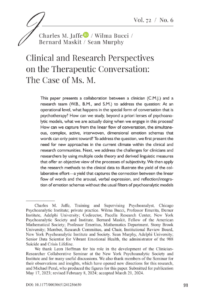
The winning paper, “Clinical and Research Perspectives on the Therapeutic Conversation: The Case of Ms. M.“, was a collaborative effort between Charles and a research team consisting of Wilma Bucci, Bernard Maskit, and Sean Murphy. Their work was selected for its significance to the field, sharing the distinction this year with Steven Cooper. This recognition highlights the caliber of research and thought leadership Charles brings to our community.
Clinical and Research Perspectives on the Therapeutic Conversation: The Case of MS. M.
Authors: Charles M. Jaffe, Wilma Bucci, Bernard Maskit, and Sean Murphy.
Abstract
This paper presents a collaboration between a clinician (C.M.J.) and a research team (W.B., B.M., and S.M.) to address the question: At an operational level, what happens in the special form of conversation that is psychotherapy? How can we study, beyond a priori lenses of psychoanalytic models, what we are actually doing when we engage in this process? How can we capture from the linear flow of conversation, the simultaneous, complex, active, interwoven, dimensional emotion schemas that words can only point toward?
To address the question, we first present the need for new approaches in the current climate within the clinical and research communities. Next, we address the challenges for clinicians and researchers by using multiple code theory and derived linguistic measures that offer an objective view of the processes of subjectivity. We then apply the research methods to the clinical data to illustrate the yield of the collaborative effort-a yield that captures the connection between the linear flow of words and the arousal, verbal expression, and reflection/integration of emotion schemas without the usual filters of psychoanalytic models of process and change. The project illustrates the critical value of clinicians’ perspectives to guide researchers and encourages clinicians to participate in research to advance our field. For researchers, this project represents a “fourth generation” of process research that includes the criteria of video-recorded, transcribed data; the clinician’s report of their experience; a theory of how emotion-laden meaning and motivations (emotion schemas) are expressed in the therapeutic conversation; and reliable, valid measures to capture and represent those processes; and that encourages researchers to access the rich contributions of clinicians’ understanding. The implication for clinical practice is a new way to look beyond the lens of psychoanalytic models into what is actually unfolding in real time.
Interpretation, Recognition, and the Analytic Field:
Donnel Stern in Conversation with Greg Rizzolo
In this 40-minute interview, Greg Rizzolo—Editor-in-Chief of the Journal of the American Psychoanalytic Association (JAPA) and faculty member at the Chicago Psychoanalytic Institute—speaks with Donnel Stern about Stern’s paper, “Interpretation: Voice of the Field.” Their conversation examines interpretation not as a technique the analyst applies, but as something that emerges from the shared interpersonal field between analyst and patient.
Grounded in relational and interpersonal psychoanalytic traditions, this conversation offers a nuanced rethinking of interpretation, authority, and analytic participation. It will be of particular interest to clinicians, scholars, and trainees engaged in contemporary relational practice.
Deepen Your Connection
Our faculty represents a prestigious lineage of psychoanalytic thought, blending decades of clinical mastery with a commitment to contemporary research. Beyond their accolades, these are the mentors who guide our candidates through the complexities of the human experience.